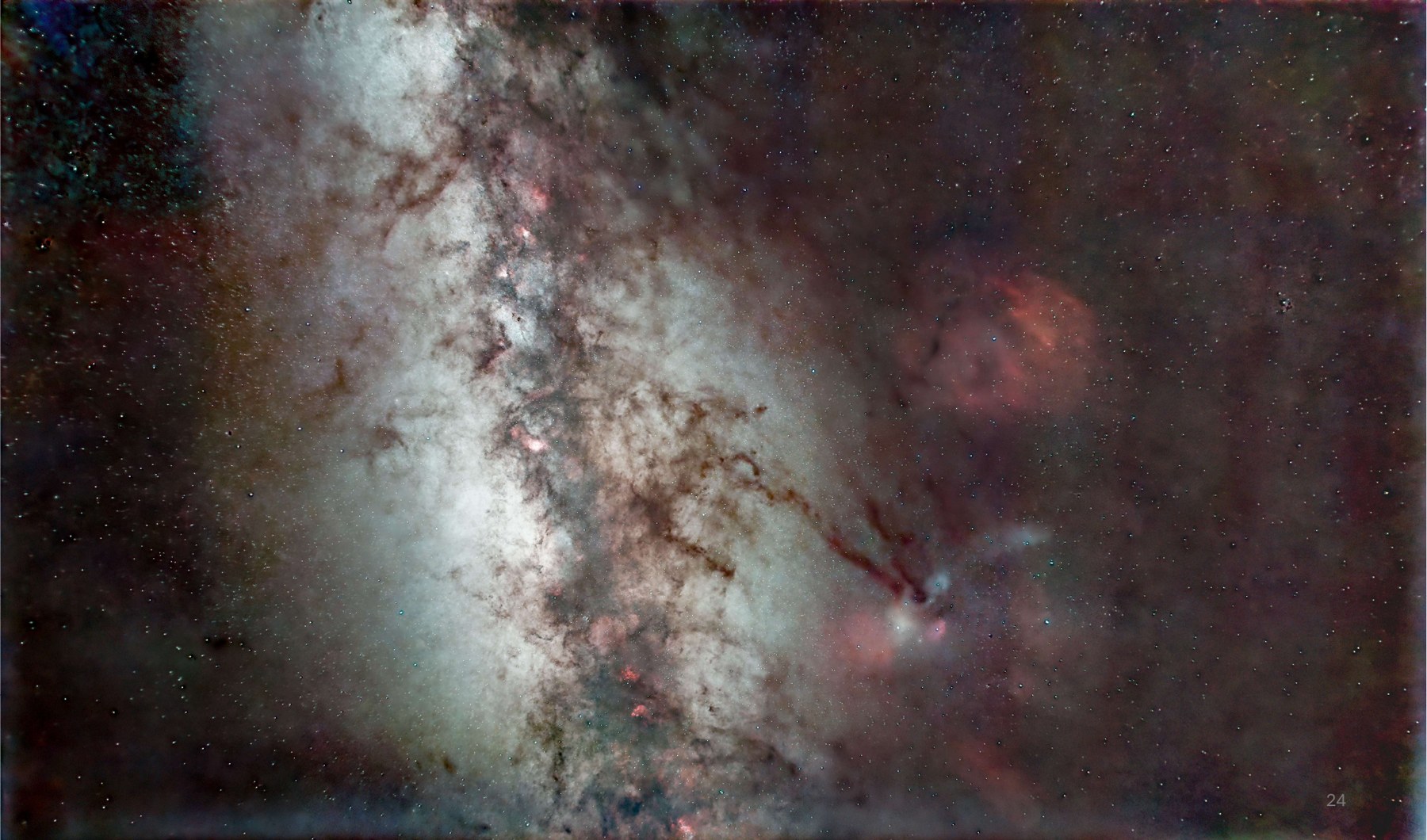
- Location
- Pefkos, eastern Rhodes, Greece — 36.07° N
- Mount
- Vixen Polarie equatorial tracker, unguided
- Camera
- Canon EOS R8, non-astro-modified
- Lens
- Sigma 24 mm f/1.4 EF
- Filter
- Astronomik CLS-CCD
- Exposures
- 8 × 300 s at f/1.4, ISO 400 (40 min total)
- Stacking
- DeepSkyStacker, with flat frames
- Processing
- PixInsight 1.9.3
Location and planning
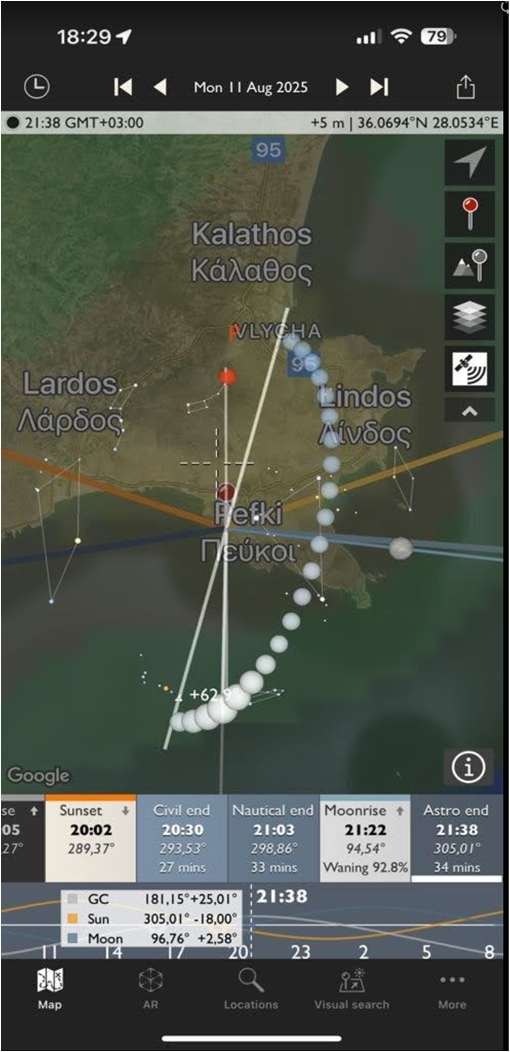
The site was a slightly light-polluted spot in eastern Rhodes, with a clear sight of the Milky Way. From 36° north in August, the galactic core is high in the south. The location was planned using TPE, The Photographer's Ephemeris, which gives the position of the galactic center for a given date, time and location. The terrain can then be checked against it beforehand.
Why an equatorial tracker is needed
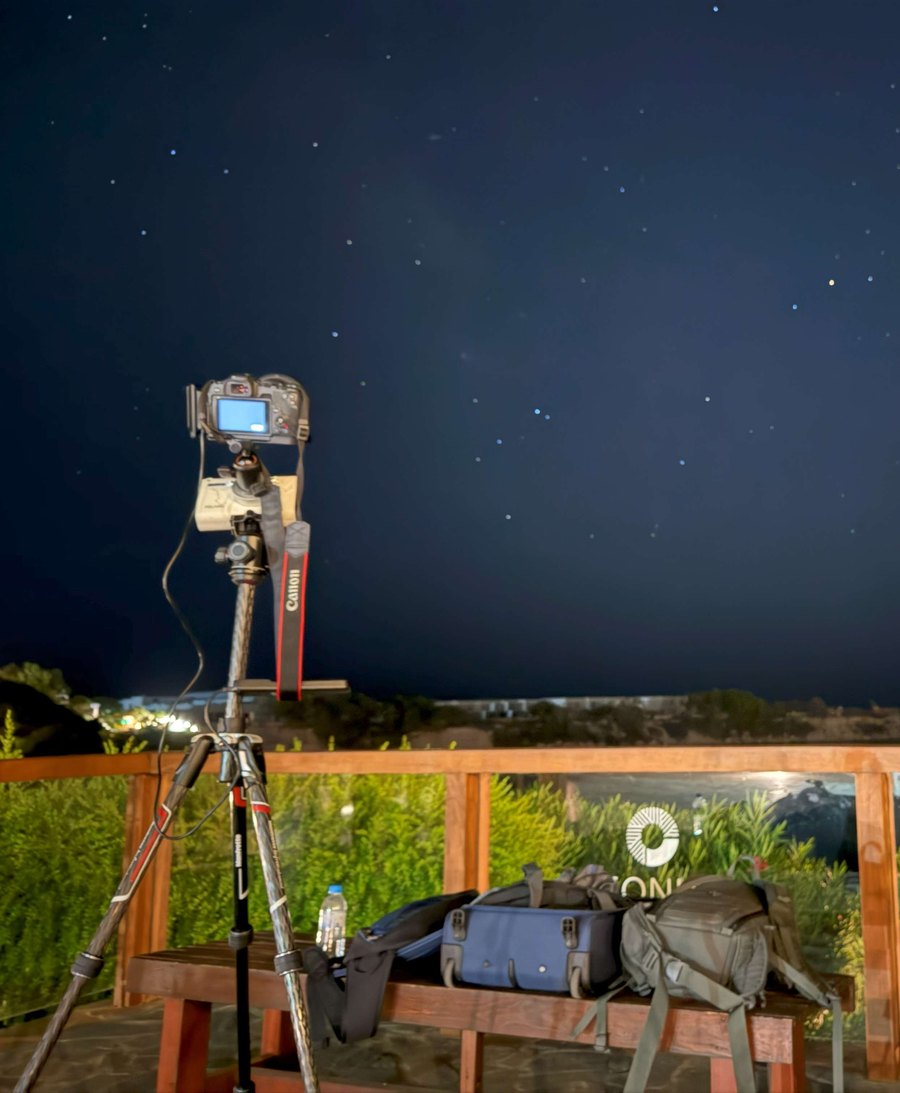
Without tracking, a 24 mm lens allows roughly fifteen to twenty seconds of exposure before the stars begin to trail. An equatorial mount rotates the camera about an axis parallel to Earth's axis of rotation, at the same rate and in the opposite direction. The sky is then stationary relative to the sensor, which makes a five-minute exposure possible.
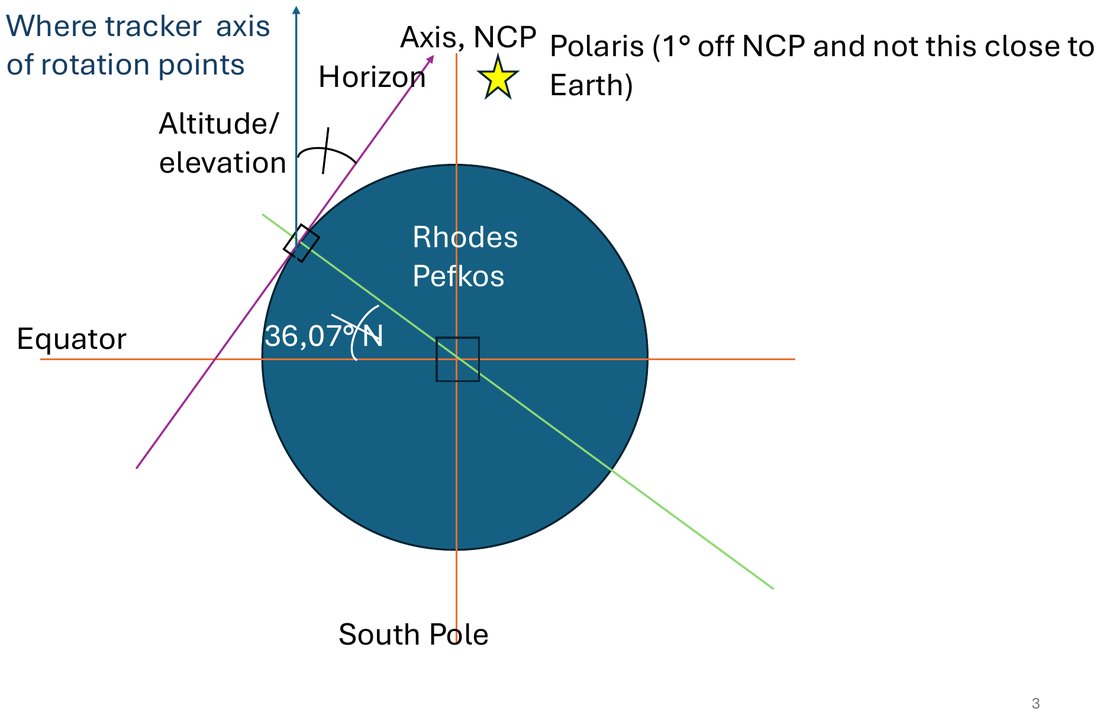
For the axis to be parallel to Earth's axis, it must point at the north celestial pole (NCP). Its angle of elevation is therefore set to the latitude of the site, which is 36.07° for Rhodes.
These were unguided exposures, meaning no second camera tracked a star and fed corrections back to the motor. Unguided exposures require excellent polar alignment, since any error in the axis produces drift, and drift over five minutes is visible.
Polar alignment
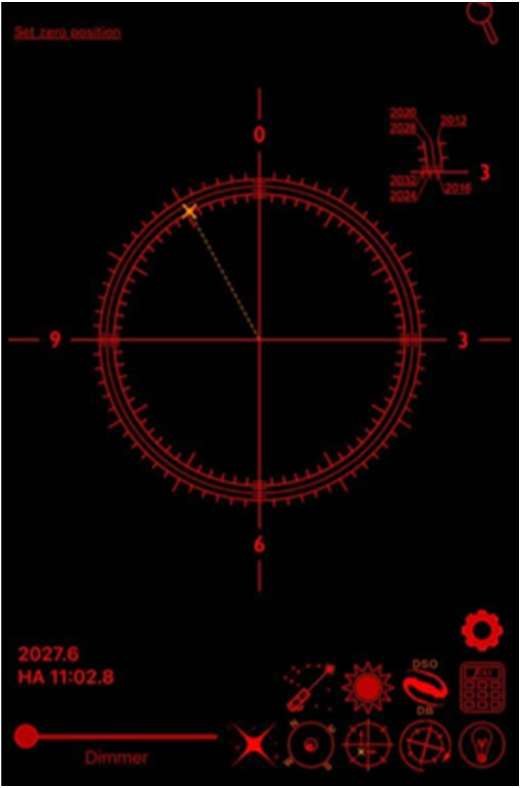
Polar alignment was done using a polar scope and the app Polar Scope Align Pro. Polaris is not at the NCP, but about a degree off it, and its correct position in the polar scope reticle depends on the date, time and longitude. The app shows that position, and the mount is turned until Polaris matches it.
What the CLS filter removes
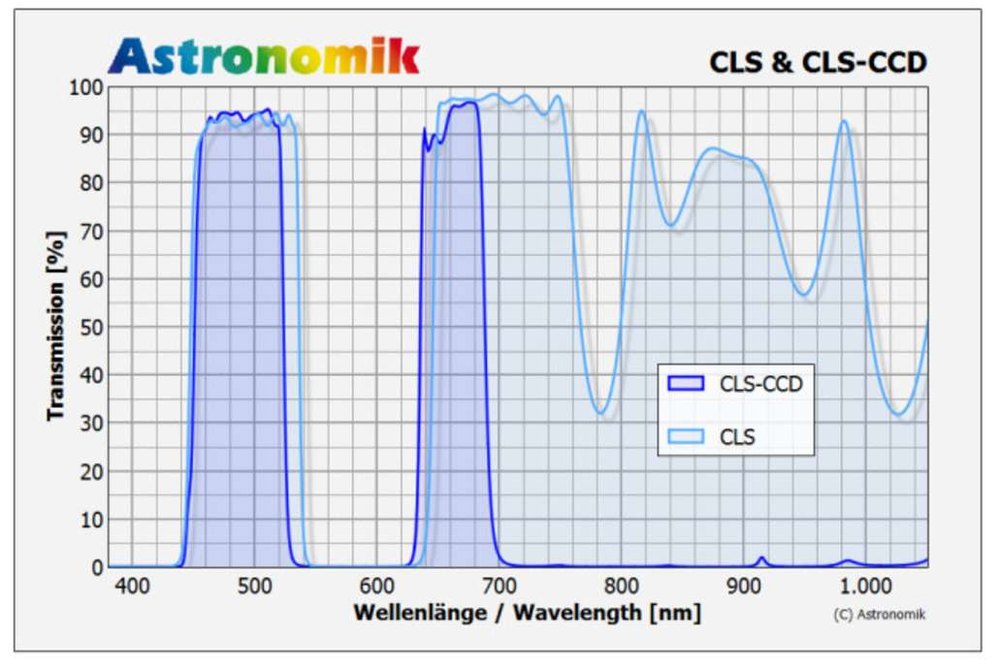
The filter was an Astronomik CLS-CCD. It rejects the wavelengths emitted by sodium-vapor street lamps, while leaving broad windows open across the rest of the visible spectrum. This is necessary for a broadband target such as the Milky Way, where starlight and dust are being photographed rather than a single emission line. The filter therefore preserves the color balance for galaxies.
Its limitation is that it only removes classic yellow light pollution from sodium-vapor lamps. LED street lighting is broadband and passes through it.
The CCD version was not needed for this camera. That variant is intended for astro-modified cameras, where the internal IR-cut filter has been removed. Other cameras in the family are astro-modified, so the filter is shared between them.
Data acquisition
Eight five-minute exposures were taken at f/1.4 and ISO 400, using exposure to the right (ETTR) without clipping the highlights.

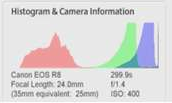
ETTR means shifting the histogram as far toward the highlights as possible without clipping. Sensor noise is worst in the shadows, so data further to the right gives a better signal-to-noise ratio (SNR) before the image is stretched.
The ISO was chosen from the measured photographic dynamic range of the R8 on Photons to Photos. ISO 400 gives almost the same dynamic range as ISO 200, and both are above ten stops. Higher gain normally costs dynamic range, so this is not the expected result.
ISO 400 was therefore the better choice. At ISO 200, the same exposure to the right would have required ten-minute exposures, and 40 minutes on target would have produced four frames. At ISO 400 it produced eight. The total integration time is the same, but twice as many frames improves outlier rejection during stacking, and one unusable frame costs less of the session.
Processing
The frames were stacked in DeepSkyStacker, including flat frames taken with an ND filter against a uniform LED panel, to calibrate out vignetting and dust. They were then processed in PixInsight 1.9.3.
- Dynamic Crop, to remove the stacking artefacts at the edges.
- GraXpert for gradient removal, run twice: once with a smoothing parameter of 1.0 for the broad light-pollution gradient, then again at 0.0 for the more complex structure remaining.
- StarXTerminator to separate the stars from everything else, then Bill Blanshan's star-reduction scripts before recombining. At 24 mm pointed at the galactic core, the star field is dense enough to otherwise dominate the nebulosity.
- BlurXTerminator for sharpening and deconvolution.
- NoiseXTerminator for noise reduction. (All three of the “XTerminator” tools are Russell Croman's, from rc-astro.com.)
- Finally, the screen transfer function, which is PixInsight's temporary preview stretch, was transferred to HistogramTransformation to make the stretch permanent.
Result
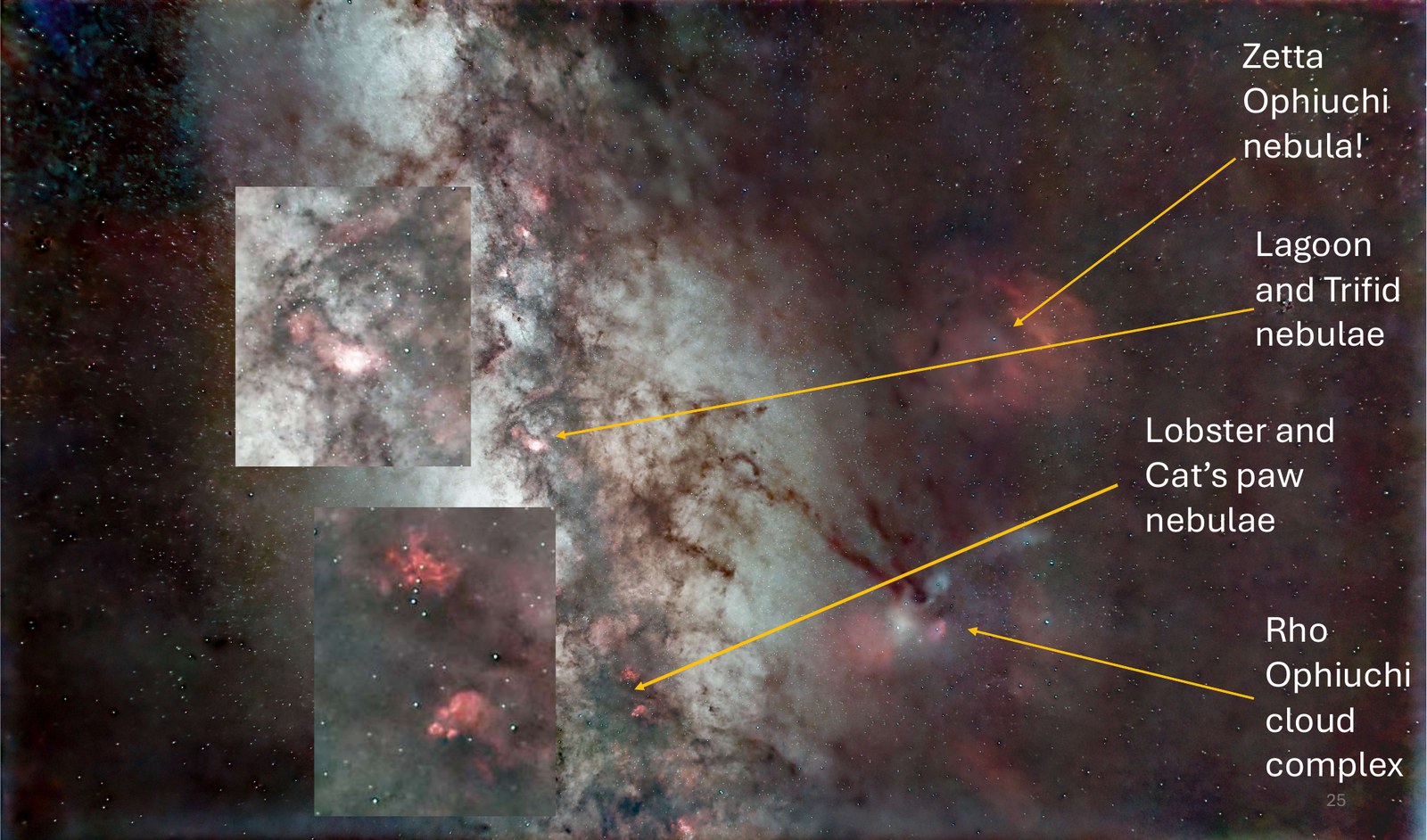
Those nebulae are red because they emit hydrogen alpha at 656.3 nm. A non-astro-modified camera has a UV/IR-cut filter bonded over the sensor, and it attenuates that wavelength heavily — roughly a quarter of peak transmission is the figure usually quoted for Canon bodies. Astro-modification replaces that filter to recover the rest, which is where the commonly quoted three- to four-fold gain in Hα sensitivity comes from.
Attenuated is not blocked, though. A fast lens and 40 minutes of integration record enough of what does get through for the Hα regions to come out red, without the color being manufactured in post. A modified camera would have reached the same signal in roughly a third to a quarter of the time.
Key elements
- An equatorial mount, even an unguided one. It raises the usable sub length from about twenty seconds to five minutes.
- Exposure to the right, to use as much of the sensor's dynamic range as possible before stretching.
- Checking the dynamic range curve for the specific camera, rather than assuming a lower ISO is always better. On the R8, ISO 400 cost almost no dynamic range and doubled the frame count.
- Proper polar alignment. With no guiding, any error in the polar axis shows up directly as drift.
Resources
- PDFFull presentation — 27 slides, including the intermediate processing steps and the full reference list
- PlanningThe Photographer's Ephemeris · Polar Scope Align Pro
- FilterAstronomik CLS-CCD
- DataPhotons to Photos — independent sensor dynamic-range measurements
- StackingDeepSkyStacker
- ProcessingPixInsight · GraXpert
- ProcessingRC Astro, Russell Croman — StarXTerminator, BlurXTerminator and NoiseXTerminator
- ProcessingStarReduction, Bill Blanshan, on the PixInsight forum